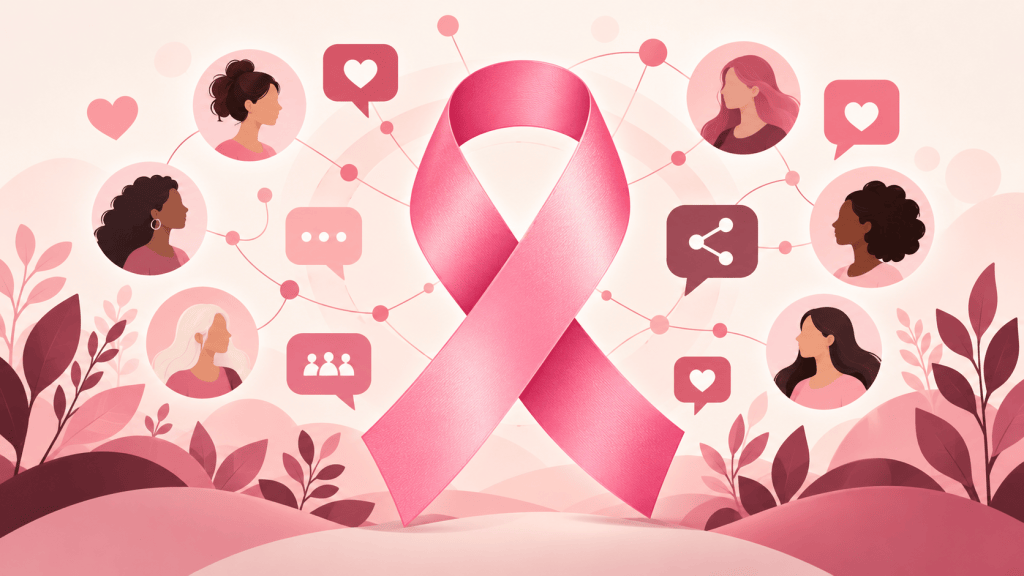
Have you ever seen a strange Facebook post that made you stop scrolling and wonder what everyone was talking about?
Imagine opening Facebook and seeing your friends posting random colors like pink, black, or red, without any explanation. Naturally, you would be curious. That curiosity was exactly what helped the breast cancer awareness meme spread across Facebook.
From Marketing to Social Change explores how a simple social media trend attracted attention to an important health issue. But it also raises an interesting question: Does making something go viral automatically mean the campaign is successful?
As someone interested in both healthcare and marketing, I find this case especially meaningful because it shows how social media can bring people together while also revealing the limitations of online awareness campaigns.
How a Simple Meme Became a Viral Trend
In 2010, Facebook users began posting the colors of their bras as status updates. The idea was to support breast cancer awareness while keeping the meaning a secret from others.
Later that year, another trend encouraged women to post statements such as “I like it on the couch” or “I like it on the floor.” These mysterious statements actually referred to where they placed their handbags.
According to CBS News, the handbag trend spread during Breast Cancer Awareness Month and encouraged curiosity and conversations online.
What made these campaigns successful at attracting attention was their simplicity. Participants did not need special skills, expensive equipment, or much time. They only needed to update their Facebook status.
From a social media marketing perspective, this is an excellent example of viral marketing and electronic word-of-mouth. People shared the content voluntarily, allowing the message to spread through their personal networks.
However, attracting attention is only one part of an effective campaign.
Did the Meme Actually Make a Difference?
This is where I have mixed feelings about the campaign.
On one hand, I appreciate the creativity behind encouraging thousands of people to participate in a health-related conversation. Social media can make serious topics feel more approachable.
On the other hand, I wonder how many people actually learned something about breast cancer from posting a color or a mysterious statement.
Did they learn about risk factors? Did they seek medical advice? Did they support breast cancer research?
The meme created curiosity, but it did not consistently provide information or a clear next step.
This reflects a concept known as slacktivism, where individuals demonstrate support for a cause through simple online activities without necessarily taking further action.
In my opinion, sharing awareness is a good starting point, but real success happens when that awareness encourages meaningful behavior.
What Social Media Marketers Can Learn
One of the most important lessons from this case study is that engagement should have a purpose.
A campaign can receive thousands of likes, comments, and shares without necessarily achieving its intended outcome.
If I were designing a breast cancer awareness campaign today, I would combine the creativity of the original meme with educational resources and opportunities for action.
For example, I would:
- Create attention: Use short videos, meaningful stories, and creative hashtags to encourage participation.
- Educate followers: Share reliable breast cancer information from organizations such as the American Cancer Society.
- Encourage action: Direct followers to screening information, fundraising opportunities, or community awareness events.
- Build community: Invite survivors, caregivers, and advocates to share their experiences voluntarily and respectfully.
- Measure results: Track educational resource clicks, event registrations, and donations instead of focusing only on likes and shares.
These strategies connect directly to what we are learning about audience engagement, relationship building, and strategic content development.
They also demonstrate why successful marketing requires clear objectives, relevant messages, and measurable results.
Why Authenticity and Inclusion Matter
Another concern I have about the original meme is that its secrecy sometimes excluded men from participating.
Although breast cancer is much more common in women, men can also develop the disease. A meaningful awareness campaign should acknowledge everyone affected.
I believe modern social media campaigns should focus on inclusive communication, authentic storytelling, and trustworthy information.
For example, organizations such as the Breast Cancer Research Foundation use their digital platforms to communicate the importance of research and support.
When people understand the purpose behind a campaign, they have a stronger reason to engage, share, and support it.
My Final Thoughts: Awareness Should Lead to Action
The breast cancer meme reminds me that social media has incredible power to capture attention and connect communities.
However, I believe the true value of a campaign should be measured by what happens after someone clicks, comments, or shares.
Did the message educate someone? Did it inspire support? Did it encourage someone to take a meaningful step?
For me, that is what separates a viral trend from an effective social media marketing strategy.
A viral post can start a conversation, but a purposeful campaign can help create lasting change.
Let’s Talk!
Have you ever participated in an online awareness challenge or shared a post supporting a cause?
Do you think viral memes genuinely promote social change, or do they sometimes create more attention than action?
I would love to hear your thoughts in the comments!
#BreastCancerAwareness #SocialMediaMarketing #DigitalActivism #ViralMarketing #SNHUSMM


Leave a Reply